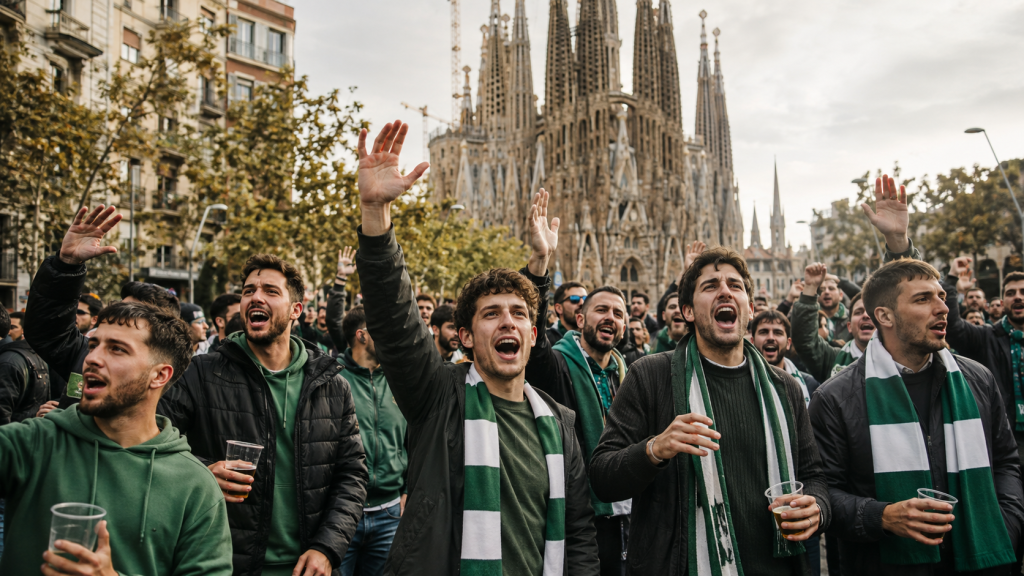
Quick answer: Football fan rights in Europe are not governed by one single European rulebook. Stadium access, police powers, prohibited items, fines and football banning measures depend largely on the law of the country where the match takes place. However, supporters involved in criminal proceedings in EU countries may also benefit from important procedural safeguards relating to information, legal assistance and interpretation. Before travelling, check the rules for the specific country, stadium and fixture.
A behaviour that causes little difficulty at one stadium can have significantly different consequences elsewhere. This is particularly important for travelling supporters carrying pyrotechnics, alcohol, banners or other items, and for anyone involved in an incident with police or stadium security.
This guide explains which football supporter rights can be considered at European level, which rules remain national, and what to do if a matchday incident becomes a legal problem abroad.
Football fan rights in Europe: there is no single stadium law
Europe does not have one law governing everything a football supporter can or cannot do inside a stadium.
Several different layers of rules can apply to the same match:
- National law governing public order, criminal offences, police powers and sporting events.
- Stadium regulations imposed by the club or venue.
- Competition regulations issued by the relevant football authority.
- Match-specific security measures introduced by police, organisers or other competent authorities.
This distinction matters. A UEFA regulation, for example, is not the same thing as the criminal or administrative law of the country where a match is played.
Travelling supporters should therefore avoid assuming that rules they know from their home country will apply at an away match elsewhere in Europe.
Stadium entry rules can change from country to country
Football stadiums commonly operate access controls, but the precise legal basis and conditions vary between jurisdictions and venues.
Before travelling, check the host club’s official supporter information for:
- Ticket and identification requirements.
- Rules for the designated away section.
- Bag restrictions and security checks.
- Prohibited items.
- Rules covering flags, banners and flagpoles.
- Alcohol restrictions.
- Stadium opening times and designated entrances.
- Transport or meeting arrangements for away supporters.
Match-specific instructions should take priority over information from previous trips. Security arrangements can change even when you have already visited the same stadium.
Flares and pyrotechnics: never assume they are permitted abroad
Pyrotechnics are a particularly important area for travelling supporters because the legal consequences can differ considerably between countries.
A flare, smoke device or firework that is treated in one way at home may be prohibited under another country’s sporting-event, public-order or criminal legislation.
Do not take pyrotechnics into a foreign stadium unless you have confirmed that the activity is expressly lawful and authorised. Club culture or previous practice is not a reliable substitute for checking the applicable rules.
Supporters travelling specifically to Spain should consult our football fan safety guide for travelling supporters, which covers Spanish stadium rules and prohibited items in more detail.
Can stadium security search football supporters?
Many European football grounds use personal searches, bag inspections, ticket controls and other access procedures. The extent of those powers and the consequences of refusing a search depend on local law and the stadium’s conditions of entry.
As a practical rule, supporters should:
- Have the correct ticket and identification available where required.
- Check what can be brought into the stadium beforehand.
- Follow instructions concerning the designated entrance.
- Ask for clarification if they do not understand why an item has been refused.
- Avoid physically confronting stewards or police over an access decision.
Being refused entry, being removed from a stadium, receiving an administrative sanction and being arrested are different legal situations. They should not be treated as interchangeable.
What rights do supporters have if police become involved?
The answer depends on what the police are doing.
An identity check, a search, an instruction to leave an area, a temporary public-order measure and a formal arrest can engage different legal rules.
If the situation becomes a criminal investigation, procedural protections become particularly important.
The European Union has adopted a series of measures establishing common minimum safeguards for suspects and accused persons in criminal proceedings. The European Commission explains the EU framework for the rights of suspects and accused persons.
The precise rules in your case still depend on the country and on how European measures have been implemented there.
Right to know what you are accused of
One important EU measure is Directive 2012/13/EU on the right to information in criminal proceedings.
It establishes minimum standards concerning information that must be given to suspects and accused persons, including information about certain procedural rights and the accusation against them.
For a travelling supporter, this is particularly important because a person should not be expected to navigate a foreign criminal procedure without understanding why they are being investigated or detained.
Do not confuse a steward’s explanation for stadium ejection with formal information about a criminal accusation. They are different processes.
Right to a lawyer in criminal proceedings
Directive 2013/48/EU establishes minimum rules concerning access to a lawyer in criminal proceedings and European Arrest Warrant proceedings within its scope.
Among other protections, the Directive provides for access to a lawyer without undue delay and, in covered circumstances, before police or other law-enforcement questioning.
It also addresses communication with third persons and consular authorities when someone is deprived of liberty.
If you are arrested abroad, request legal assistance as early as possible. Do not assume that an embassy, travelling companion, supporter liaison officer or club representative can replace an independent lawyer acting in the criminal proceedings.
Right to an interpreter and translation
Language is one of the biggest practical difficulties for supporters involved in legal proceedings abroad.
Directive 2010/64/EU on interpretation and translation in criminal proceedings establishes minimum rules concerning interpretation and translation for suspects and accused persons who do not speak or understand the language of the proceedings, within the Directive’s scope.
This includes interpretation during relevant criminal proceedings, including police questioning and court hearings, and translation of documents considered essential for the exercise of defence rights.
This does not mean that every interaction with a steward or police officer automatically gives a supporter a right to a professional interpreter. The legal protection concerns criminal proceedings and must be assessed according to the particular situation and jurisdiction.
Can you contact your embassy or consulate if arrested abroad?
Consular assistance can be important when a travelling supporter is deprived of liberty in another country.
EU procedural rules concerning access to a lawyer also address communication with consular authorities in relevant cases. National law and international consular rules may provide additional protections.
A consulate may be able to provide practical assistance and information about the local legal system. However, consular officials do not act as your criminal defence lawyer and cannot normally interfere with the decisions of local courts or police.
How long can police detain a football supporter?
There is no single Europe-wide detention period that supporters can rely upon.
The maximum period of police detention and the point at which a detained person must be released or brought before a judicial authority depend on the law of the country concerned and the circumstances of the investigation.
Do not rely on the detention limit from your home country when travelling abroad.
The European e-Justice Portal provides country-specific information about criminal proceedings and defendants’ rights within EU Member States.
If the incident happens in Spain, see our dedicated guide explaining what to do if a football fan is arrested in Spain.
Do football banning orders work the same way across Europe?
No. Restrictions affecting attendance at football matches can arise through different legal mechanisms.
Depending on the jurisdiction and circumstances, consequences may involve:
- A stadium ejection.
- A club or venue ban.
- An administrative sanction.
- A court-imposed measure.
- A criminal sentence.
- A restriction connected with football-specific national legislation.
These measures are not legally equivalent. A club refusing future admission is different from a court order, and an administrative fine is different from a criminal conviction.
The duration, appeal procedure and geographical effect of any restriction must be checked under the applicable national law or competition rules.
Can a sanction in one country affect future football trips?
Potentially, but there is no simple rule under which every football-related sanction imposed in one European country automatically becomes a Europe-wide stadium ban.
The effect of a decision depends on what type of measure has been imposed, which authority imposed it, the applicable national legislation and whether any mechanism exists for recognition, enforcement or information sharing.
If you receive a document referring to a stadium ban, travel restriction or future match attendance, do not assume that its geographical scope is obvious from the English translation or from what you were told informally. Ask a lawyer to confirm exactly what the measure prohibits.
High-risk matches and special police arrangements
Certain fixtures may be subject to enhanced security measures because of the teams involved, previous incidents, expected attendance or an official risk assessment.
This can affect:
- Police deployment.
- Away-supporter routes.
- Meeting points.
- Transport arrangements.
- Stadium entry times.
- Supporter segregation.
- Items permitted inside the venue.
The fact that a match has heightened security does not remove supporters’ fundamental legal protections. At the same time, travelling fans should take official police and organiser instructions seriously.
Always check the latest match-specific information rather than relying on a general European guide.
What to do if you face a legal problem at an away match
- Stay calm and do not physically resist police.
- Establish what is happening. Being asked for identification is different from being formally arrested.
- Ask why you are being detained or investigated if the situation has become a criminal matter.
- Request a lawyer where you are entitled to legal assistance.
- Ask for interpretation if you are involved in criminal proceedings and cannot understand the language being used.
- Keep every police, court, administrative or stadium document you receive.
- Do not sign documents you do not understand without obtaining appropriate advice.
- If you are due to fly home, confirm whether the procedure creates any further obligation before leaving the country.
What if you have already returned home?
A football-related legal problem does not necessarily end when your return flight leaves.
Depending on the country and procedure, you may later receive a court summons, administrative notification, fine or request for further action.
If this happens:
- Do not ignore official correspondence from another country.
- Keep the envelope, email and complete document.
- Record the date on which you received it.
- Have the document properly translated if necessary.
- Check whether a deadline is running.
- Seek advice in the country where the procedure is taking place.
Never assume that a foreign document is unimportant merely because you are no longer physically present in that country.
What supporters should check before travelling
A short legal and practical check before an away trip can prevent unnecessary problems.
- Read the host club’s official away-supporter information.
- Check your ticket and identification requirements.
- Confirm prohibited items and bag restrictions.
- Check rules concerning flags, banners and pyrotechnics.
- Save your club’s supporter liaison contact.
- Save the details of your embassy or consulate.
- Check whether the fixture has special transport or police arrangements.
- Keep copies of important travel documents.
For more preventive guidance, read our football fan safety guide for travelling supporters.
Legal problems for supporters travelling to Spain
Legal Supporters is focused on football supporters and supporter organisations facing legal issues in Spain.
If you are travelling to Madrid, Barcelona, Bilbao, Seville, Valencia or elsewhere in Spain and an incident develops into a police, administrative or criminal procedure, our legal services for football supporters in Spain can provide assistance according to the circumstances of the case.
If you or another supporter currently needs help in Spain, contact Legal Supporters for legal assistance.
Frequently asked questions
Do football fans have the same rights everywhere in Europe?
No. There are important European human-rights and EU procedural frameworks, but stadium regulations, police powers, offences, penalties and football-specific sanctions remain heavily dependent on national law.
Do EU rules give an arrested supporter the right to a lawyer?
EU legislation establishes minimum standards on access to a lawyer in criminal proceedings within its scope. The precise rules and procedure must still be checked in the country where the supporter has been arrested.
Do I have a right to an interpreter if arrested at an away match?
EU law provides important protections concerning interpretation in criminal proceedings for suspects and accused persons who do not understand the language of the proceedings, within the relevant legal framework. The right should not be confused with ordinary communication during stadium entry or other non-criminal interactions.
Is there one maximum police detention period across Europe?
No. Maximum detention periods and judicial-control procedures vary by country. Always check the rules of the jurisdiction where the detention occurs.
Can UEFA rules replace national law?
No. Competition and stadium regulations may apply to the event, but they should not be confused with the criminal, administrative or public-order law of the country hosting the match.
Can Legal Supporters represent me anywhere in Europe?
Legal Supporters provides specialist legal assistance in Spain. If the incident occurs elsewhere in Europe, the supporter should obtain advice appropriate to the jurisdiction where the procedure is taking place.
Official sources
- European Commission – Rights of suspects and accused persons
- Directive 2010/64/EU – Right to interpretation and translation in criminal proceedings
- Directive 2012/13/EU – Right to information in criminal proceedings
- Directive 2013/48/EU – Right of access to a lawyer and communication upon deprivation of liberty
- European e-Justice Portal – Country-specific information on defendants’ rights
For more practical guides for travelling football supporters, visit the Legal Supporters blog.