
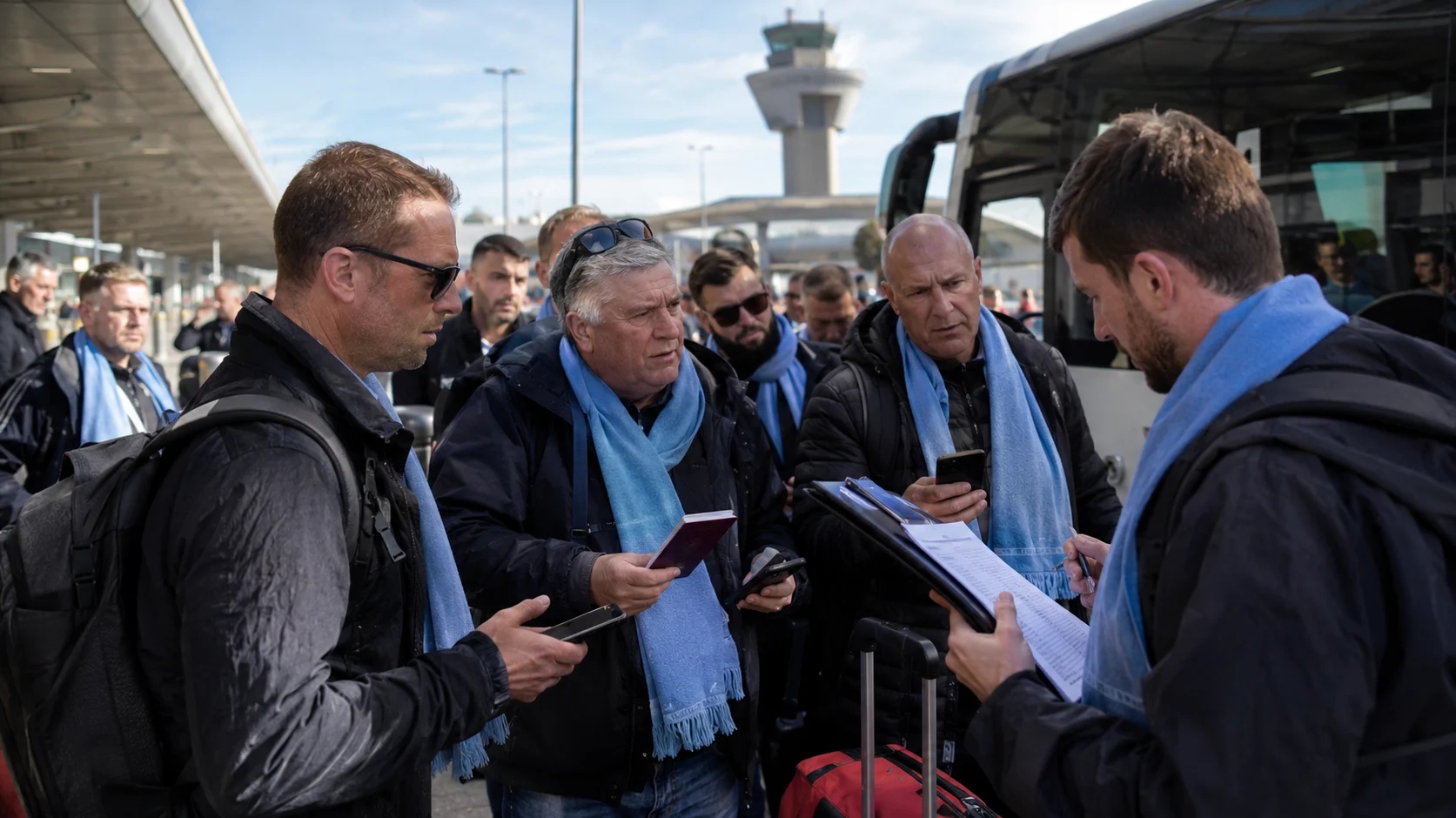
Organising a trip to Spain for a supporters’ club, fan group or amateur team means more than booking flights for a lot of people. As the organiser, you are the person the police, the home club and your own members will turn to if plans change or something goes wrong. This guide covers what to sort out before you travel, on matchday and if a member of your group gets into trouble.
If you are travelling on your own or with a couple of friends, our guide to travelling to Spain for football is a better place to start.
Before you book: confirm the fixture and the ticket allocation
Kick-off times in Spain are often confirmed only a few weeks before the match, and European fixtures can move for TV or security reasons. Before you commit to group flights or a coach, check:
- the confirmed date and kick-off time with your club or the competition organiser;
- how many away tickets your club will receive and how they will be distributed;
- whether tickets are personal and linked to an ID document, which is common for European matches;
- the official guidance your club publishes for travelling supporters.
Never buy tickets for the group from unofficial sellers. Besides the risk of fraud, fans with tickets in the home section can be refused entry or removed. See our guide on ticket scams in Spain.
Keep a group list with the essentials
Keep a simple list, stored offline as well as in the group chat, with each traveller’s full name, nationality, mobile number, accommodation and an emergency contact back home. If someone is detained, injured or loses their documents, this is the first thing the police, a hospital or a lawyer will ask for.
Remind everyone to carry their passport or national ID card at all times. In Spain, police can ask for identification, and not having it can make a simple situation much longer.
Plan group transport and the meeting point
For high-profile matches, local police usually set a meeting point for away fans and escort them to the stadium. Your club will normally share these details in the days before the match. Build your timings around them rather than around the kick-off time.
If you are travelling by coach, check where coaches can drop off and park on matchday, and whether the police require them to arrive at a specific time. Plan the return journey too: away fans are often held inside the stadium for some time after the final whistle, so last trains or late flights can be missed.
Stadium-specific information is in our guides to the Bernabéu, the Metropolitano, La Cartuja, La Cerámica, Balaídos and the Coliseum.
Flags, banners and what the group can bring
Large flags, banners, drums and megaphones often need approval in advance from the home club or the security services, and anything with offensive, violent or discriminatory content will be refused. If your group wants to bring material, ask your club how to request permission well before the match.
Brief your members on the rules for bags and banned items. Our guide to stadium bag rules in Spain explains what is usually allowed.
Brief the group on Spanish law
Spain’s sports violence law is strict, and fans from other countries are sometimes surprised by how quickly a fine or ban can follow. Before you travel, make sure everyone knows that:
- pyrotechnics such as flares and smoke bombs are prohibited and can lead to heavy fines and stadium bans;
- alcohol is not sold inside stadiums, and many cities restrict drinking in the street;
- throwing objects, entering the pitch or using discriminatory chants or symbols are treated as serious offences;
- a ban imposed in Spain can affect future trips to matches.
Read more about fines for football fans in Spain and stadium bans.
Agree who speaks for the group
Choose one or two people who will deal with the police, the stewards and the club on the day. A calm, single point of contact makes it easier to resolve problems at the meeting point or the turnstiles, and avoids several members arguing with officers at once.
If a member of the group is arrested or fined
If someone in your group is detained, stay calm and do not try to intervene physically. Note the time, the place and, if possible, which police force was involved. The person detained has the right to a lawyer and, if they do not speak Spanish, to an interpreter. They should not sign anything they do not understand.
Contact a lawyer as early as possible. Our step-by-step guide explains what to do if you are arrested in Spain.
How Legal Supporters can help your group
We work with supporters’ groups travelling to Spain before, during and after the match: we review the travel plan and local rules with the organisers, stay on call on matchday, and assist at the police station or in court if a member of the group needs us. See our services or contact us before you travel so we have your group’s details in advance.
Group organiser checklist
- Fixture, kick-off time and ticket allocation confirmed with the club
- Tickets bought through official channels, with names matching ID
- Offline list with names, phone numbers, accommodation and emergency contacts
- Passports or ID cards carried by every member
- Police meeting point and timings checked
- Coach drop-off, parking and return journey planned
- Permission requested for flags, banners or drums
- Group briefed on pyrotechnics, alcohol and behaviour rules
- Group spokesperson agreed
- Lawyer’s contact details shared with the whole group
Reviewed by Guillermo J. Fernández, football fan lawyer in Madrid and member of the Football Supporters Europe Fan Lawyer Network.