
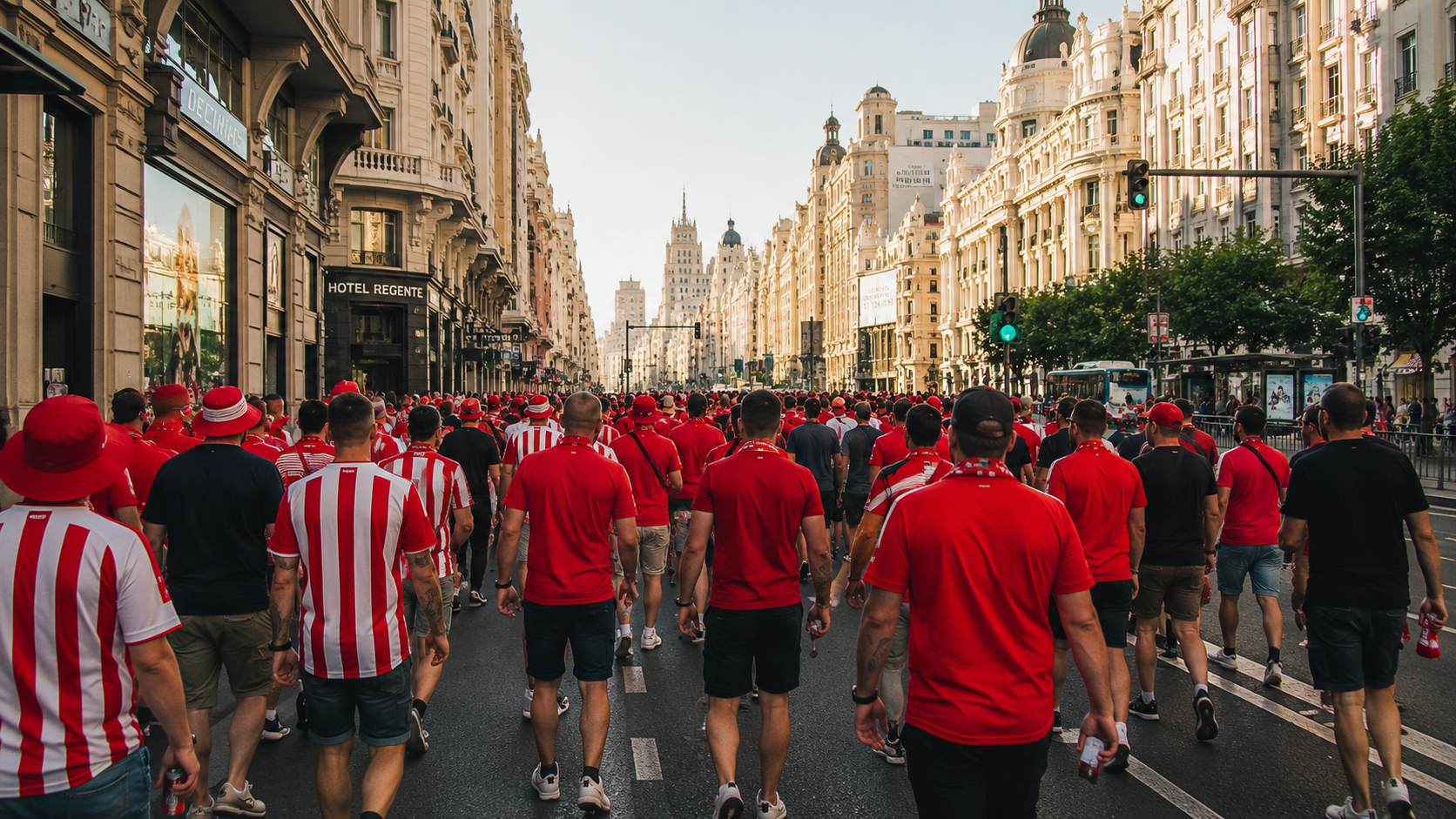
Real Betis are playing at the Estadio de La Cartuja while their own ground, the Benito Villamarín, is rebuilt. La Cartuja is on an island on the Guadalquivir, away from the city centre, so getting there takes planning.
European matches at La Cartuja in 2026/27
- 14 October 2026, 21:00 (Champions League): Real Betis v Porto
- 21 October 2026, 21:00 (Champions League): Real Betis v Feyenoord
- 9 December 2026, 18:45 (Champions League): Real Betis v Como
- 20 January 2027, 21:00 (Champions League): Real Betis v Arsenal
La Cartuja at a glance
| Away section | Upper tier, north-east corner |
|---|---|
| Away entrance | Gates 12 and 13 at recent European matches (gate 14 for wheelchair users) |
| Stadium opens | Usually two hours before kick-off |
| Transport | Matchday shuttle bus from Blas Infante (Metro Line 1), city buses C1 and C2 |
| Recent meeting point | Parque de los Perdigones, about 30 minutes on foot from the stadium |
Getting to the stadium
On matchdays a shuttle bus runs from Blas Infante station on Metro Line 1, starting about two and a half hours before kick-off. City buses C1 and C2 also serve the stadium. Walking from the Alameda de Hércules area takes around 45 minutes.
For a recent European match, away fans were asked to gather at Parque de los Perdigones, which has bars nearby and good bus links. Your club will confirm the meeting point for your match.
Away section and entry
At recent European matches, passport checks were mandatory at the away turnstiles and fans without ID were refused entry. Bring the original document, not a photo. Expect a hold of 15 to 30 minutes after the final whistle.
What you can and cannot bring
Spanish stadiums apply the access rules of Law 19/2007 against violence in sport, plus UEFA and club rules. In practice, away fans at La Cartuja should expect:
- Bags: bags up to about 25 x 30 cm have been accepted at recent European matches. Small clear water bottles (500 ml or less) were allowed with the cap removed. Larger bags and rucksacks are refused and there is usually no left-luggage at the away entrance. Our guide to stadium bag rules in Spain explains the details.
- Banned items: flares, smoke bombs and any pyrotechnics, glass, cans, objects that could be thrown, umbrellas with metal tips, professional cameras and face coverings.
- Flags and banners: must be fire-retardant and free of political, offensive or violent messages. Large flags usually need prior approval through your club.
- ID: carry your passport or national ID card. Spanish police can ask for ID at any time, and UEFA matches often include ID checks at the turnstiles.
Alcohol, pyrotechnics and Spanish law
Alcohol is not sold inside Spanish football stadiums, and you can be refused entry if you are visibly drunk. In the city, many councils fine people for drinking in the street, so stick to bars and terraces.
Lighting a flare, throwing objects or entering the pitch are infringements under Law 19/2007. Penalties for individuals range from €150 to €650,000, and can include a ban from all Spanish stadiums for up to five years. See our guides to stadium bans in Spain and football fines in Spain.
If something goes wrong
- Stopped or searched by police: stay calm, show your ID and follow instructions. You can ask for an interpreter.
- Given a fine or report (denuncia): keep every document and take a photo of it. Do not sign anything you do not understand. There are deadlines to respond.
- Arrested: you have the right to a lawyer and an interpreter, and to tell your consulate. Read what to do if you are arrested in Spain.
- Lost passport or ticket: see our guide to losing documents at a match abroad, and only buy tickets through your club (how to avoid ticket scams).
How Legal Supporters can help
Our lawyers in Spain assist away fans before, during and after matches in Seville: preventive advice, mediation with police and stewards, police-station assistance and criminal defence. We work in English, Spanish, French, German, Italian and Portuguese. See our services or contact us if you or someone in your group needs help.
Gates, meeting points and escort times are confirmed by your club and local police a few days before each match. Always check your club’s latest travel advice. Information last reviewed: October 2026.
Reviewed by Guillermo J. Fernández, football fan lawyer in Madrid and member of the Football Supporters Europe Fan Lawyer Network.