
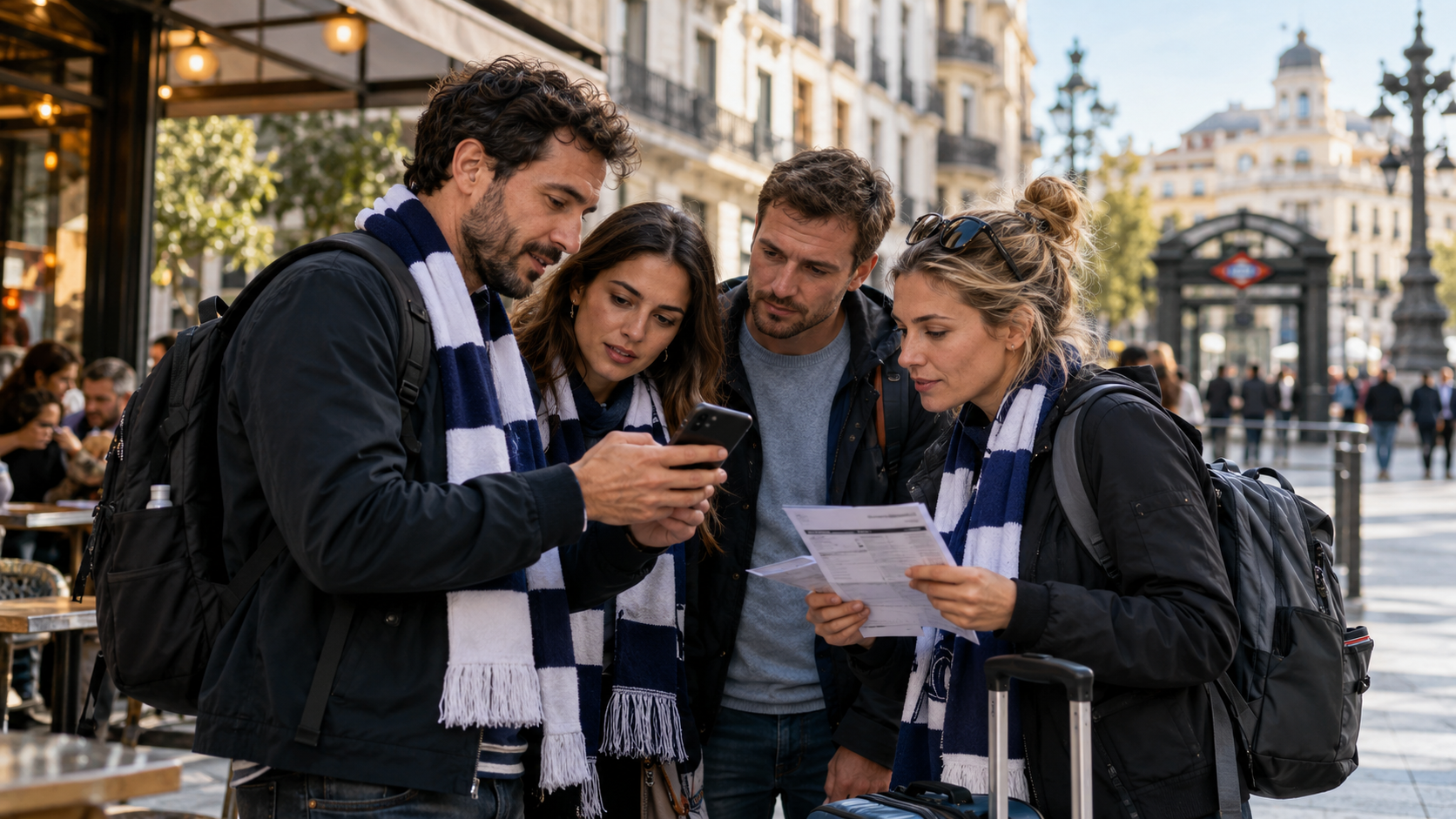
You have found the flights, agreed the dates with your friends and started planning the trip. There is only one thing missing: a match ticket. When availability is limited, an unexpected offer can be tempting, especially if someone claims to have seats in the section you want.
For supporters researching football ticket scams in Spain, the most useful starting point is the organiser’s own ticket information. Check who is authorised to sell, how tickets are delivered and whether transfers are allowed before sending money. This guide explains the checks to make and the practical steps to take if something goes wrong.
Start with the club’s official ticket information
Visit the official website of the club or competition organising the match. For an away allocation, check your own club’s announcements too. Follow the ticket links provided there and read the conditions for the specific fixture. If a seller claims to be an official partner, look for confirmation from the club rather than relying on a badge displayed on the seller’s website.
Check exactly what you are buying. Confirm the match, date, stadium, section and number of seats. If you are travelling with other supporters, establish whether the tickets are suitable for your group and whether you will be seated together. A ticket that exists can still be unsuitable for your plans or subject to conditions you have overlooked.
Keep a record of the conditions shown when you purchase. This gives you something concrete to refer to if the delivery date, seat allocation or seller’s explanation changes later.
Look for warning signs before paying
Take time to assess the offer, even if the seller says another buyer is waiting. A familiar club crest, convincing profile photograph or enthusiastic conversation about football does not establish that someone owns a valid ticket.
Warning signs worth checking include:
- An unsolicited message offering tickets after you post about the match.
- Pressure to pay immediately without time to review the conditions.
- A request to leave a sales platform and complete payment privately.
- Unclear details about the seat, delivery method or seller’s identity.
- Payment instructions that change during the conversation.
The UK police provide general advice on ticket fraud, including warnings about sellers requesting direct bank transfers outside a website. These precautions are useful when assessing an online offer. For a match in Spain, separately check the organiser’s own sales and transfer conditions.
Can a screenshot prove that a football ticket is genuine?
A screenshot alone is not a reliable way to establish that you will be admitted. It may show a booking confirmation or ticket image without demonstrating that the seller can transfer the ticket to you, that the ticket remains valid or that the format will be accepted at the entrance.
Ask how the ticket must be delivered and used under the organiser’s rules. Where an official transfer process exists, follow that process. Do not assume that receiving a PDF, photograph or account login completes a valid transfer.
For example, UEFA’s warning about unauthorised tickets for its 2026 club competition finals states that screenshots of mobile tickets are not valid for those events. It also explains that tickets obtained through unauthorised channels may be cancelled. Those conditions concern the finals covered by the announcement; check the applicable rules for your own fixture.
Check delivery arrangements before travelling
Establish when and how your ticket is due to arrive. Some organisers release tickets closer to the event, so a ticket not being immediately available does not by itself prove fraud. Compare the seller’s explanation with the official delivery arrangements and the terms of your purchase.
If the promised delivery date passes, contact the seller through the channel you used to buy. Ask for a clear response and keep the correspondence. Where a platform is involved, check its support process promptly. Avoid leaving an unresolved ticket problem until you are standing outside the stadium.
Once the ticket arrives, check the fixture details and any app or identification requirements. For the rest of your matchday preparation, see our guide to football fan safety in Spain, which covers stadium access and practical precautions for visiting supporters.
What to do if your ticket is rejected at the stadium
Remain calm and ask staff where ticket problems are handled. Explain how you obtained the ticket and show the relevant booking information. Ask whether the issue concerns the entrance, ticket format, identification, cancellation or another problem. A rejected scan does not, on its own, establish that the seller committed fraud.
Follow the organiser’s instructions and avoid repeatedly trying different entrances without clarification. Record the explanation you receive, including the time and the help point you attended. If staff provide written confirmation, keep it with your purchase records.
Contact the seller or platform with a factual description of what happened. Preserve any response. The information you collect will be useful when discussing the transaction with your payment provider or deciding whether to report suspected fraud.
What to do if you suspect football ticket fraud
Keep your purchase records together
Save the original listing, website address, seller profile, messages, receipt and payment reference. Keep the ticket file or delivery email as well. Write a short timeline covering when you found the offer, what was promised, when you paid and what happened afterwards.
Store these records privately. If you discuss the incident publicly, avoid exposing payment details, personal documents or ticket codes. The aim is to preserve useful information without sharing more sensitive data.
Contact your bank or payment provider promptly
Explain that you suspect ticket fraud and ask what steps are available for the payment method you used. If you also disclosed card details or account credentials, tell the provider so it can advise on securing them. The Police Service of Northern Ireland’s ticket fraud guidance recommends contacting your bank if you lose money through this type of fraud.
Ask about the evidence and deadlines relevant to your transaction. Do not assume that reporting the problem automatically results in reimbursement; the provider will need to assess the circumstances.
Check how to report the incident
If the incident concerns a match or events in Spain, consult the Spanish National Police website for official contact and reporting information. Explain where the purchase took place, where you are now and why you suspect fraud. Ask which reporting route is appropriate rather than assuming every case can be completed through an online form.
If you need advice about the legal situation arising from your trip, you can contact Legal Supporters. Provide a concise account and the documents you have gathered so the team can understand the circumstances and discuss whether it can assist.
A checklist before buying football tickets in Spain
- Find the organiser’s official ticket page independently.
- Check whether the seller or sales channel is recognised.
- Confirm the fixture, section, price and delivery arrangements.
- Read the identification and transfer conditions.
- Understand the payment method and applicable purchase terms.
- Keep your confirmation and all relevant correspondence.
- Resolve unexplained changes before travelling to the stadium.
Following your team should start with confidence in your booking. Give yourself time to check the seller, understand the ticket conditions and ask questions before paying. For more information about preparing for an away trip and dealing with legal issues in Spain, explore the Legal Supporters guides for football fans.
Reviewed by Guillermo J. Fernández, football fan lawyer in Madrid and member of the Football Supporters Europe Fan Lawyer Network.